Week 23, 2026
I made it my mission to seriously pursue my CUDA journey from this week. As this was week 0 where I had to figure some stuff about where exactly I needed to begin with, the issue that I had while reading the PMPP book came to my mind: I sucked at C. Too much .py, .ts & .tsx in my life. I knew a bit about pointers before, but I realized I had all but dumped it down the drain.
I’m not a big fan of roadmaps, but I had to at least ensure I did not drift away into irrelevant stuff. So I asked a couple of experts who’re well-versed with GPU stuff, and prepared a high level roadmap for myself to loosely follow over the span of the next 7-8 months.
In which C is the first step. I’ve decided to firstly get a good enough base in C before continuing chapter 3 of the PMPP book, hopefully to be done within a month. And here I am.
This Week: C Tooling Basics
I knew how to do some gcc abc.cpp -o abc, but I needed to get a hold of some compiler flags for
tooling + debugging.
Some flags that I’ve decided I’ll use regularly are:
Strict mode by default
cc -std=c11 -Wall -Wextra -Werror hello.c -o hello-std=c11 ⇒ compile using the C11 language standard, keeps the language mode explicit
-Wall ⇒ enable many common warnings
-Wextra ⇒ Enable extra warnings beyond -Wall, useful for stricter learning builds
-Werror ⇒ Treat warnings as errors since failed builds can leave an older executable in place
Basic debugging
cc -std=c11 -Wall -Wextra -Werror -g -O0 hello.c -o hello_debug-g ⇒ adds debug information for tools like lldb. usually does not change normal program output
-O0 ⇒ disables optimizations. good for debugging as it keeps generated code closer to the source
Measuring performance
cc -std=c11 -Wall -Wextra -Werror -O2 hello.c -o hello_performance-O2 ⇒ moderates optimization. same visible output for hello.c; used for release/performance
builds and not debugging
Memory errors or undefined behaviors
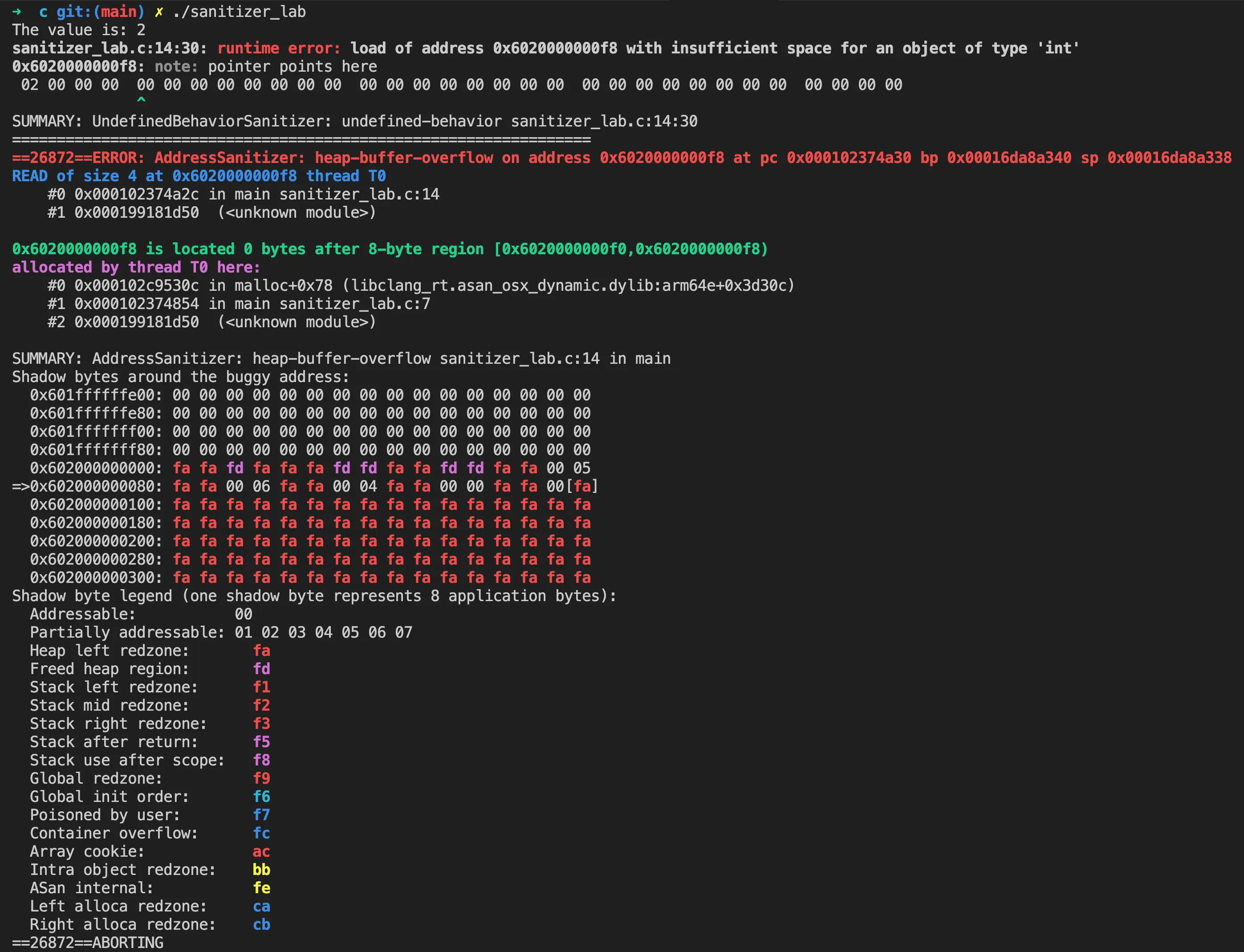
cc -std=c11 -Wall -Wextra -Werror -g -O1 -fsanitize=address,undefined -fno-omit-frame-pointer hello.c -o hello_sanitizer-fsanitize=address ⇒ adds runtime checks for many memory errors. catches stack overflow, heap
overflow, use-after-free, and double-free
-fsanitize=undefined ⇒ adds runtime checks for many undefined behaviors
-fno-omit-frame-pointer ⇒ preserves frame pointers for clearer stack traces. used in sanitizer
builds so reports can show useful call stacks
Next Week
- Start memory, pointers, and flat arrays in C. I’ve dedicated 2-3 weeks to get comfortable with these, but I need to work faster.
- Read a couple of technical reports on model releases.